Christmas Spiced Sourdough
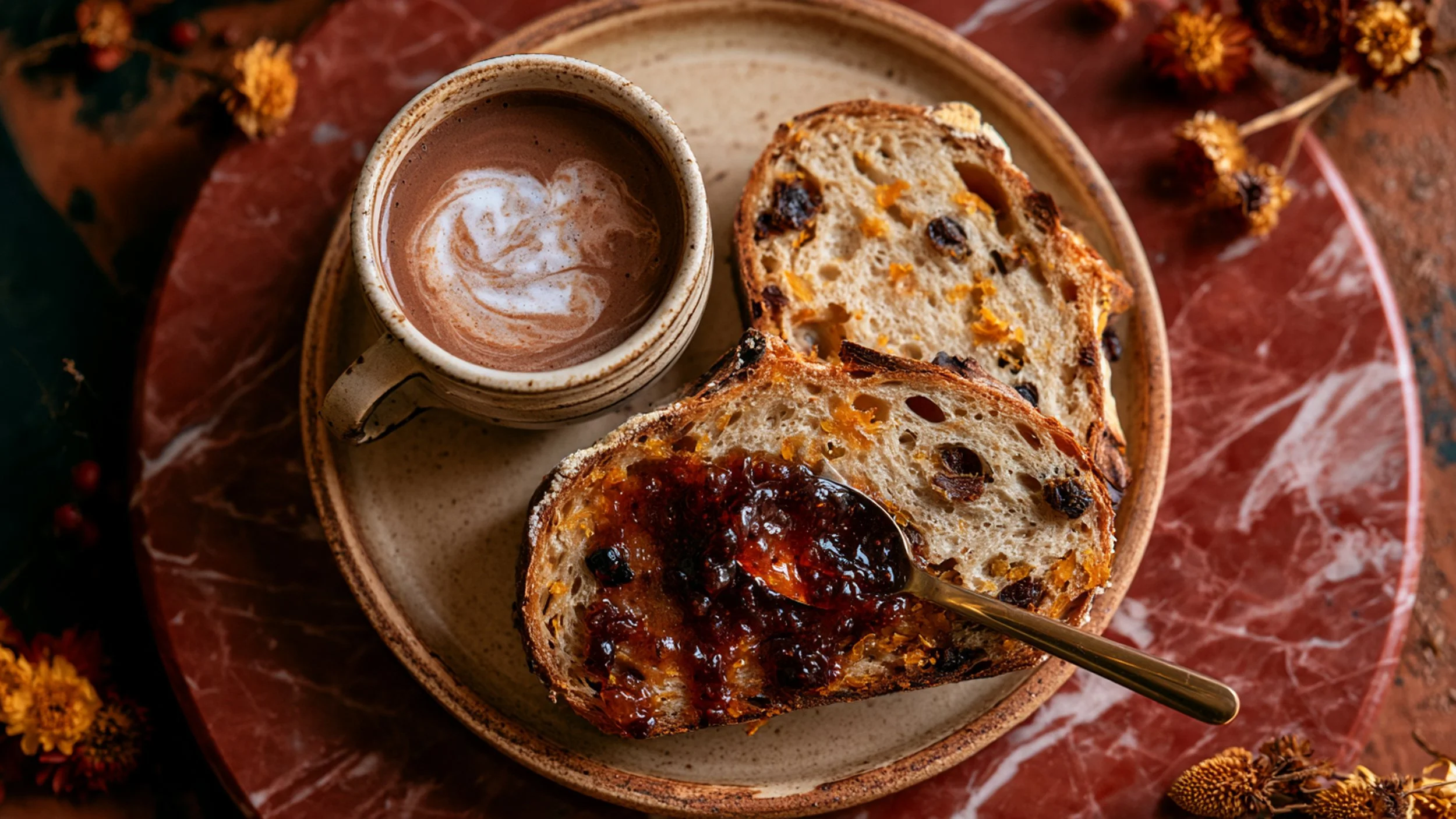
Something to Carry Over
I start this loaf two days before anyone arrives. If the bread is already made, the rest can go wrong and I will not mind. It is a superstition more than a strategy, but it has never once failed me.
December does something to a house. The light goes early and the rooms get smaller and everyone drifts toward the kitchen without deciding to. There is a particular kind of tiredness that comes with the end of a year, the sort you do not notice until you sit down, and I have learned to meet it with warmth rather than argue with it. My aunt used to say a house is only as warm as its worst-lit corner, which was her way of explaining why she moved lamps around all winter. I do not move lamps. I turn the oven on.
So the fruit went in to soak on the twenty-second, raisins and currants under water, left to take on weight overnight. The levain went beside it in its jar. Then I turned off the kitchen light and went up to bed knowing that something downstairs was quietly getting on with it. That is the part I like most, the sense of having set something in motion that no longer requires me. Half of what I love about sourdough is that it works while I sleep, that the effort and the result are separated by hours I spend doing nothing at all.
The Jar Above the Stove
The spices are where this loaf stops being ordinary. Mace, which I did not grow up calling by name but recognized instantly the first time I used it properly, warmer than nutmeg and less sweet, with something almost floral underneath. Mixed spice, which I bring back in my suitcase every time I go home because what they sell here is not the same thing and I have stopped pretending otherwise. Nutmeg grated fresh, because the pre-ground kind tastes like the memory of nutmeg rather than the thing itself.
And cardamom. My grandmother kept the pods in a jar on the shelf above her stove, and she crushed them with the back of a spoon into coffee that she made too strong for anyone but herself. She was not a baker. She never once made anything sweet that I can remember. What she made was coffee, and a fuss, and I did not understand until much later that those were the same gesture wearing different clothes.
I think about her more in winter than at any other time, which makes no sense given where she lived and what her winters looked like. But scent does not care about geography. I open the cardamom and I am eight years old in a kitchen that no longer exists, being handed something too bitter for me and drinking it anyway because I had been offered it. That is the whole of what I understood about love at eight. Someone hands you a cup, and you take it, and you do not say that it is too strong.
I still cannot buy cardamom without holding the jar a second longer than I need to.
What the Cream Does
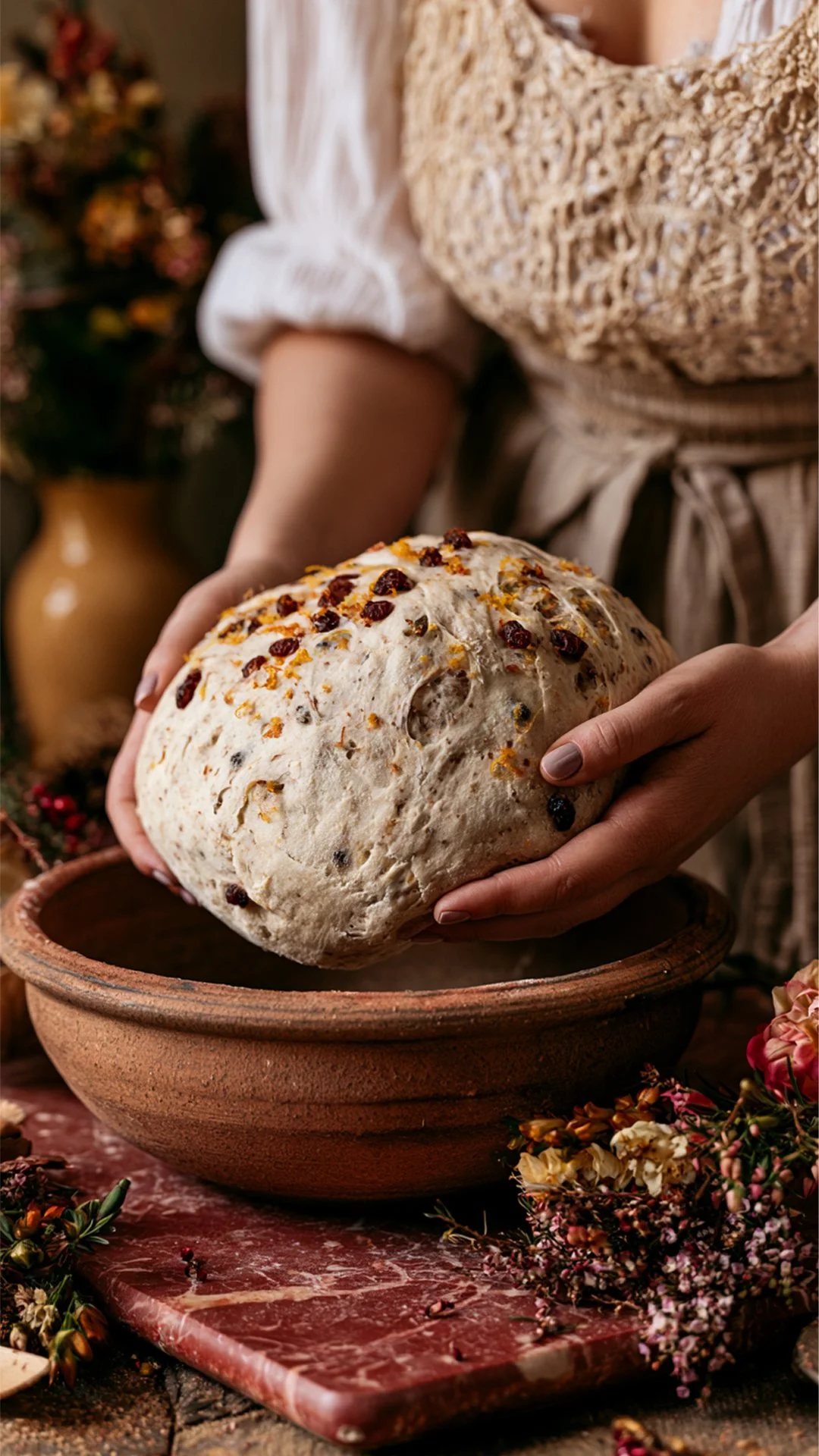
All of it goes into the mixer together in the morning, the spices and the fruit and the flour, and the cream. The cream is the part that changes everything about how this dough behaves. It runs for a quarter of an hour, which feels like a long time to stand watching a bowl turn. For the first several minutes it looks wrong. Fat and sugar hold gluten back, and the dough stays slack and shaggy well past the point where a lean loaf would have pulled itself smooth. I have watched newer bakers give up right there, adding flour to fix a problem that is not a problem. Then somewhere near the end it changes, and you can see it change, and it comes away from the sides in one piece.
What you get for the wait is a crumb that stays soft for days and a crust that colours darker than plain bread ever does, because the sugar catches in the oven.
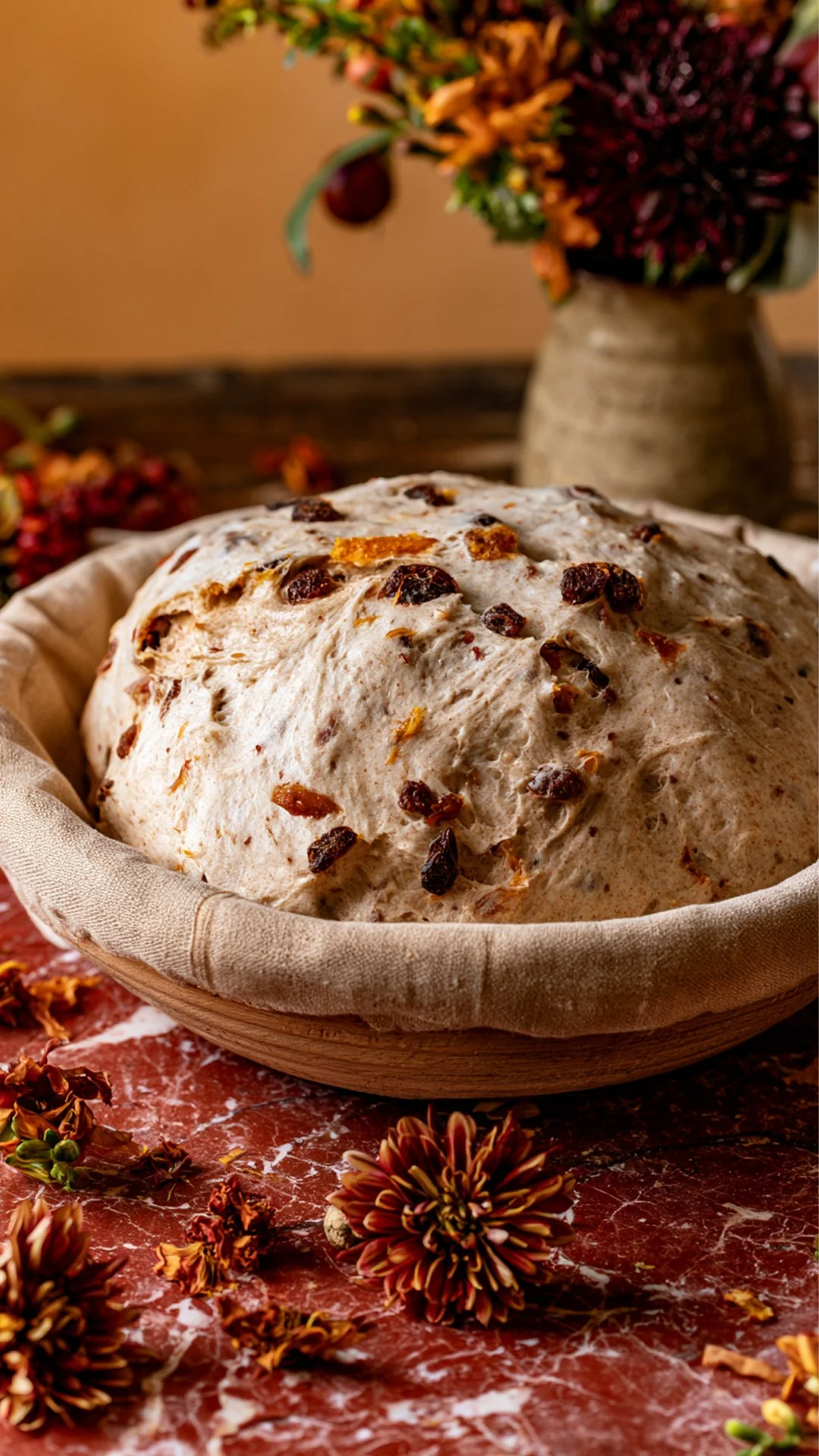
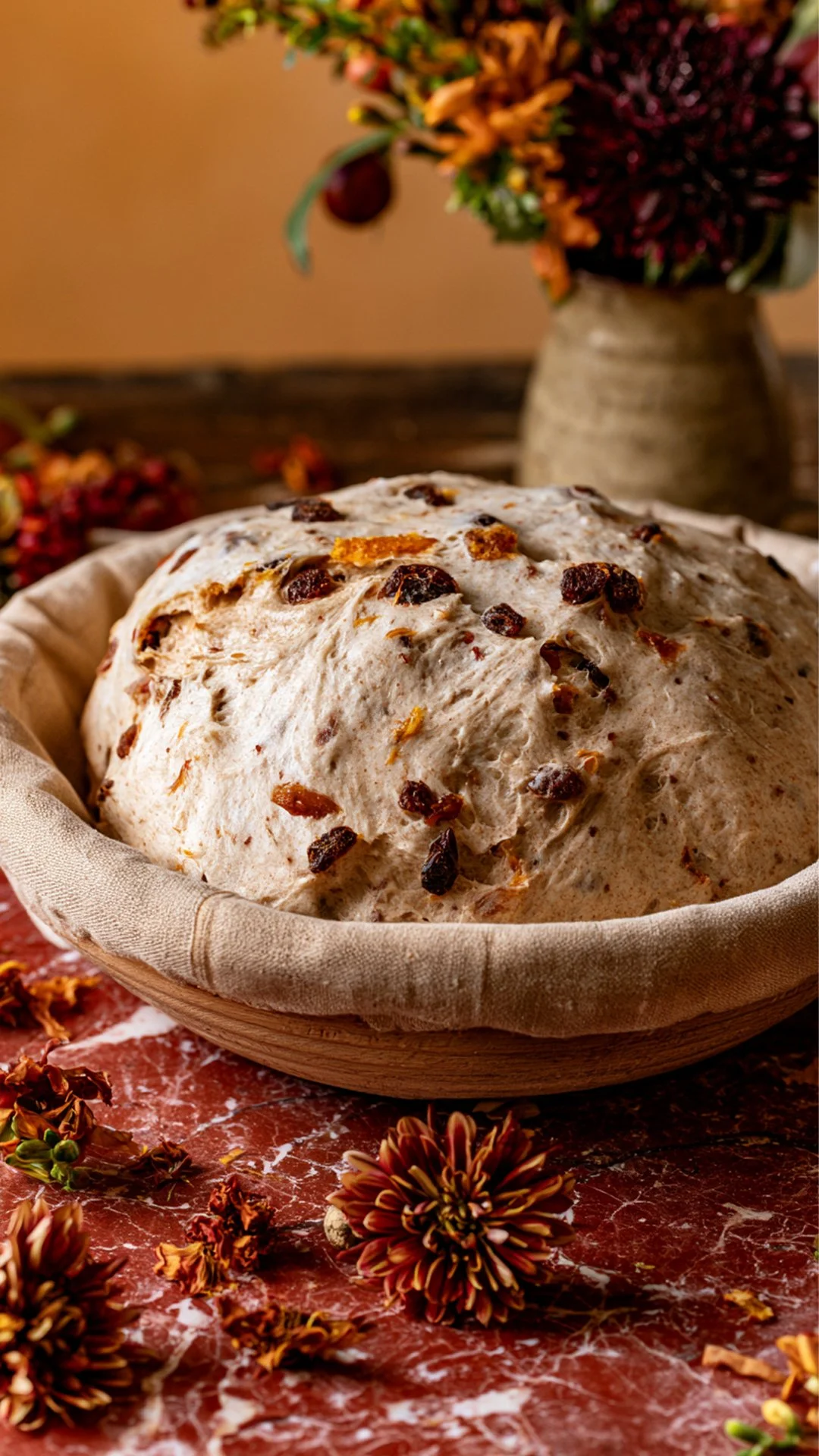
Then it rises until doubled, and I shape it and give it half an hour in the banneton before it goes into the fridge for the night. That last part is the one people skip and should not. The cold is where the flavour is made. The acidity deepens, the crumb tightens into something that will hold its shape under the weight of all that fruit, and the sugars stop bleeding out and settle where they are. There is no shortcut. You cannot bake this bread on the morning you think of it, and I have come to like that about it. Some things ask you to decide in advance that they matter.
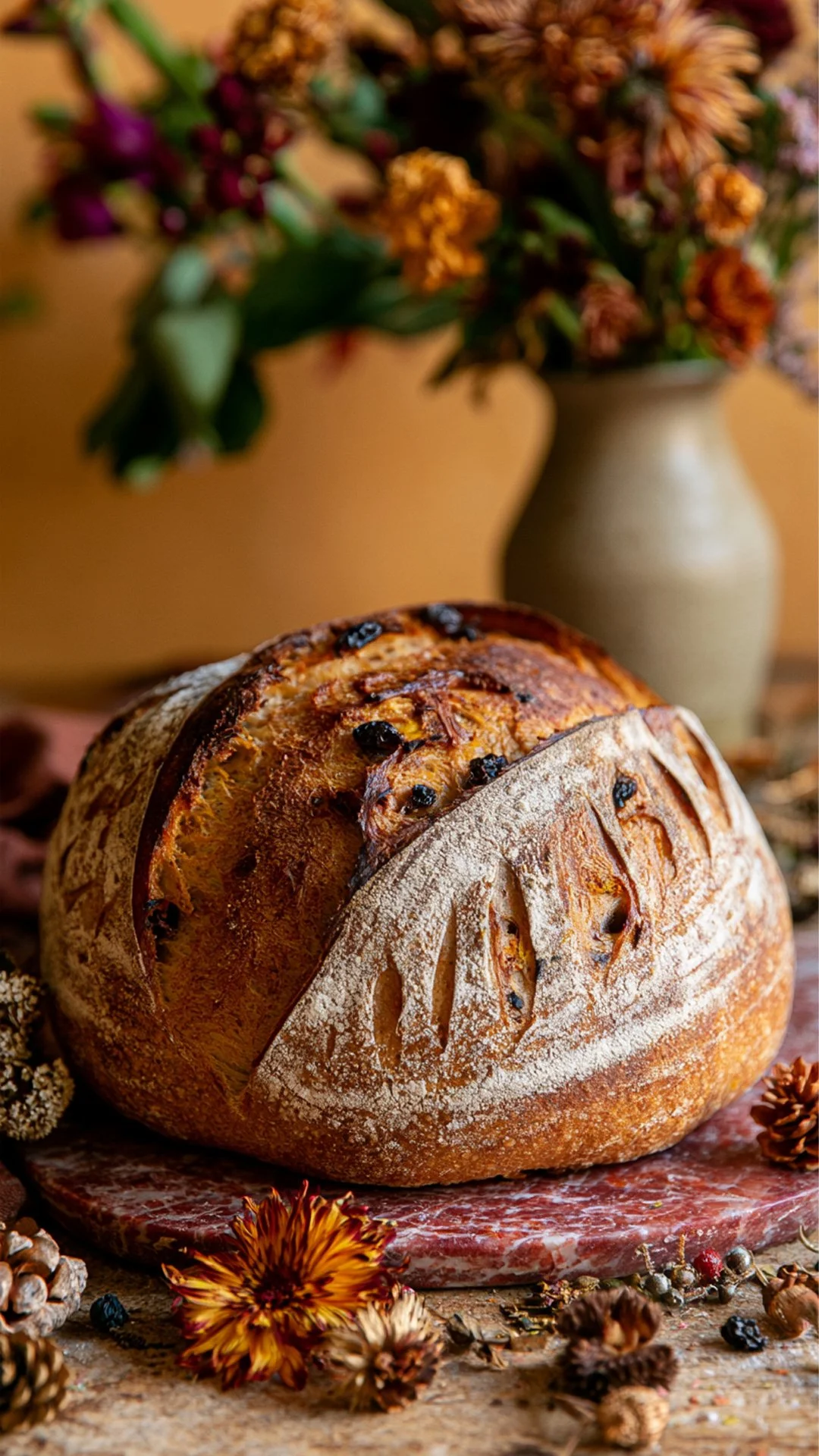
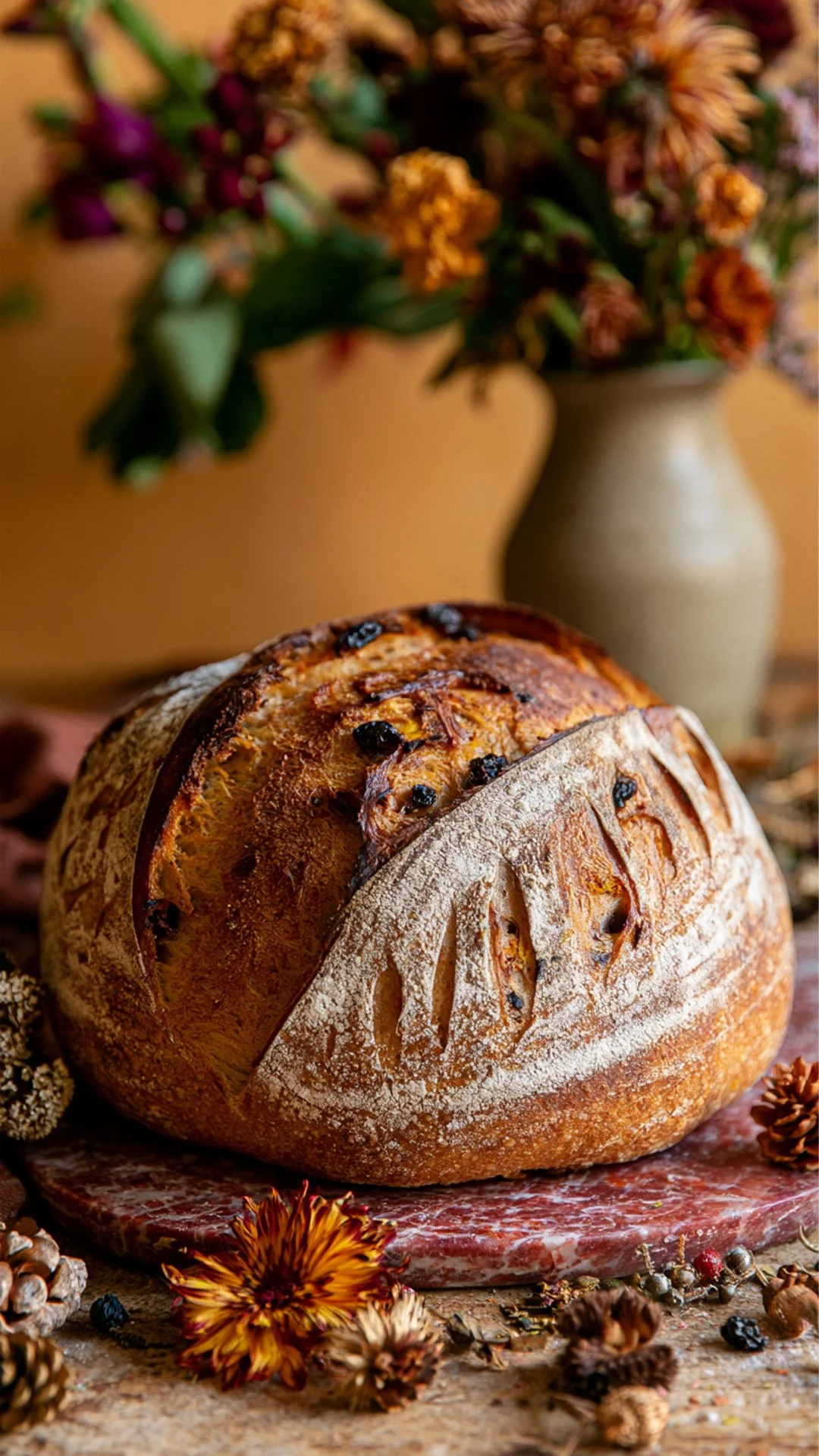
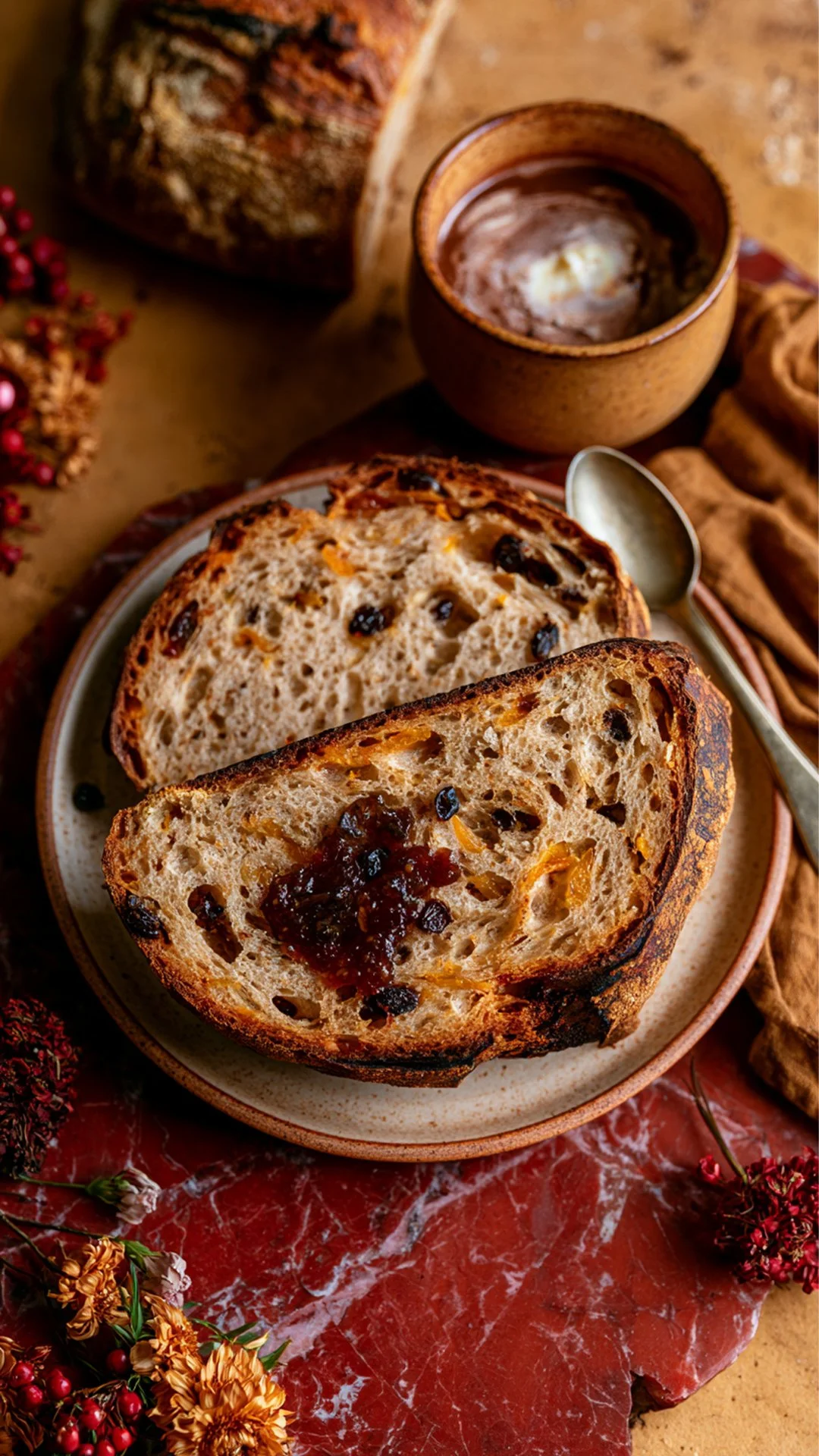
I scored it on Christmas Eve morning, a pine branch down the centre, one long spine with the ribs angled off. It wants a steady hand and a very sharp blade, and I always hold my breath. It came out dark and blistered, the currants near the surface caramelised, the orange throwing itself through the whole ground floor. My daughter came in and asked if it was a tree. I said it was meant to be. She looked at it a while and said it was more of a feather, which was fairer than I would have liked. We agreed it could be both.
The Hour Before
By the afternoon the house was ready in the way houses are ready before guests, which is to say tidied in the rooms people will see and abandoned everywhere else. My son had eaten most of the good cheese and was denying it with an unconvincing sort of dignity. My daughter had made place cards nobody asked for, one of them for the dog.
There is a particular quiet in that hour. The work is finished and the noise has not started, and you stand in a clean room with nothing to do but notice it. I stood at the counter with the loaf cooling and the light going blue outside, and thought about how much of my life has been spent exactly here, waiting for the door. Every Christmas I can remember has had this hour in it, in different kitchens, in different countries, with a steadily changing cast of people to open the door for. The table gets rearranged whether you agree to it or not.
My oldest friend arrived first, as she always does, early and pretending it was traffic. She came in with her coat still on and stood over the loaf without touching it.
“Well,” she said.
That was the whole review. I have been chasing that syllable for twenty years.
Four Days of It
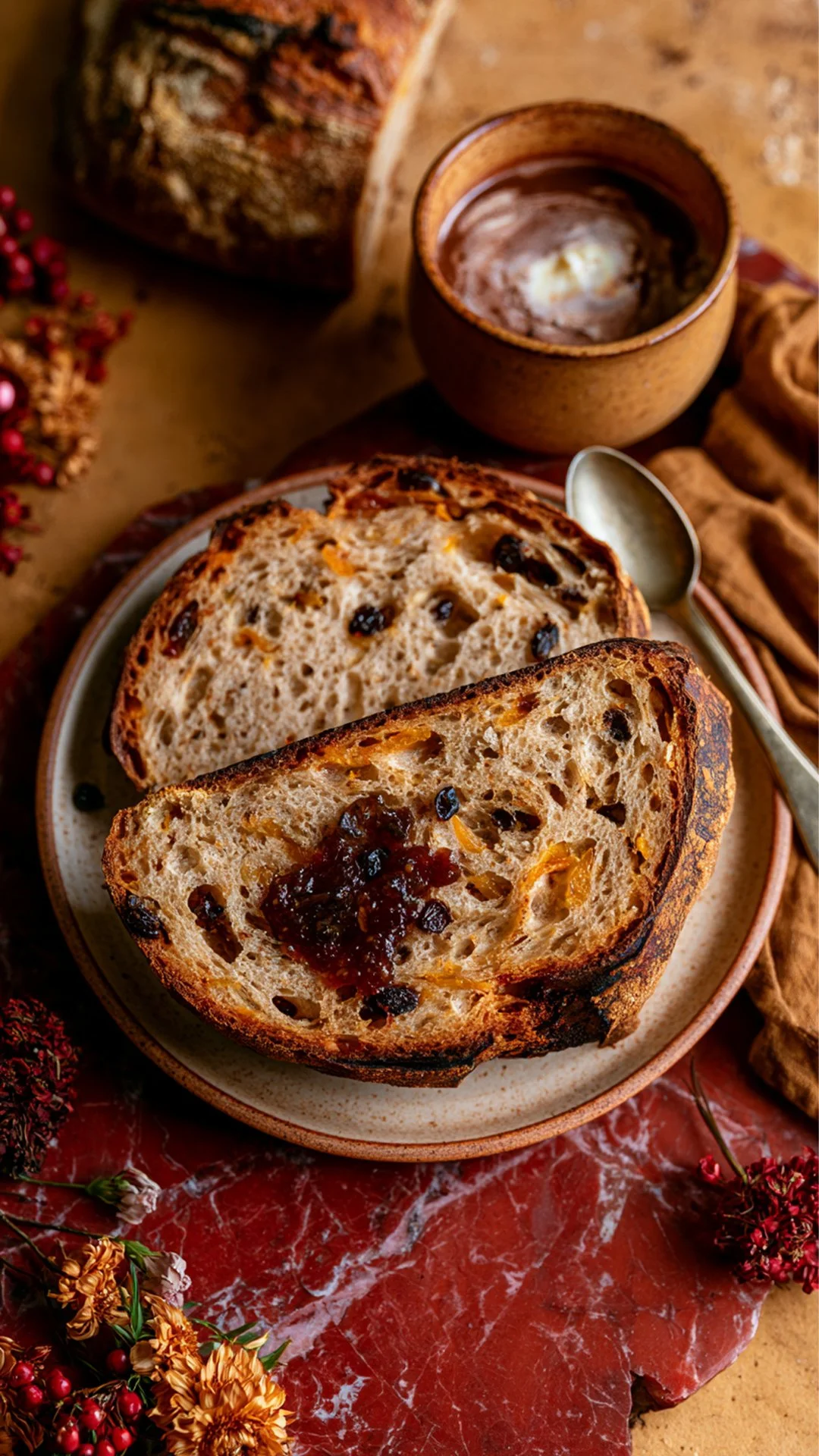
We ate late and badly and it was perfect. The bread went round toasted, with butter, then with jam, then with the good cheese that turned out to have survived after all. The orange came through more strongly against the salt than I expected. Somebody had brought a trifle nobody asked for and everybody finished.
At some point the children fell asleep in the front room in a heap, the way they used to when they were small enough for it to be dignified. Nobody moved them. The conversation dropped a register and carried on around them.
The loaf lasted to the end of the week. It kept under a cloth on the board and got better every day, the crumb going closer, the spice settling rounder than it was on Christmas Eve. We ate it toasted every morning, through Boxing Day and the strange unmarked days that follow, when nobody quite knows what day it is and nobody minds.
There were two slices left on the last of them. I toasted both, ate one, and left the other on the board under the cloth as a little treasure for someone else to find.
Christmas Spiced Sourdough Recipe
Yield: 1 large boule (about 14 slices)
Prep Time: 30 minutes
Rise Time: 12–16 hours (including overnight cold proof)
Bake Time: about 50 minutes
Cool Time: 3–4 hours
Total Time: about 24 hours
Calories: 260 per slice
LEVAIN
Ingredients
30 g active sourdough starter
120 g bread flour (12 to 14% protein)
130 ml filtered water (100°F)
Instructions
Mix the levain: The night before, whisk the starter into the warm water until dispersed, then stir in the flour until no dry patches remain.
Leave to rise: Cover and rest at warm room temperature overnight, until doubled, domed, and bubbly throughout.
FRUIT SOAK
Ingredients
120 g raisins
60 g dried currants
Enough warm water to cover
Instructions
Soak the fruit: The night before, cover the raisins and currants with warm water and leave overnight to plump.
Drain well: Drain thoroughly and pat dry before mixing. Wet fruit will slacken the dough and streak the crumb.
DOUGH
Ingredients
All of the levain
460 g bread flour
105 ml filtered water (100°F)
125 ml heavy cream (100°F)
12 g salt + 20 ml filtered water
125 g cane sugar
1 g ground mace (½ teaspoon)
1 g ground nutmeg (½ teaspoon)
0.5 g ground cardamom (¼ teaspoon)
3 g British mixed spice (1 teaspoon)
All of the soaked and drained raisins
All of the soaked and drained dried currants
15 g orange zest (about 4 navel oranges)
Instructions
Combine everything: Add all the ingredients to the bowl of a stand mixer fitted with the dough hook, including the soaked fruit and orange zest.
Knead: Mix on medium-low for 10–15 minutes. The dough will look slack and shaggy for the first several minutes; this is the fat and sugar slowing gluten development. Do not add extra flour. It will come together and pull cleanly from the sides of the bowl.
Bulk Rise: Cover and leave at warm room temperature until doubled in size.
SHAPE
Instructions
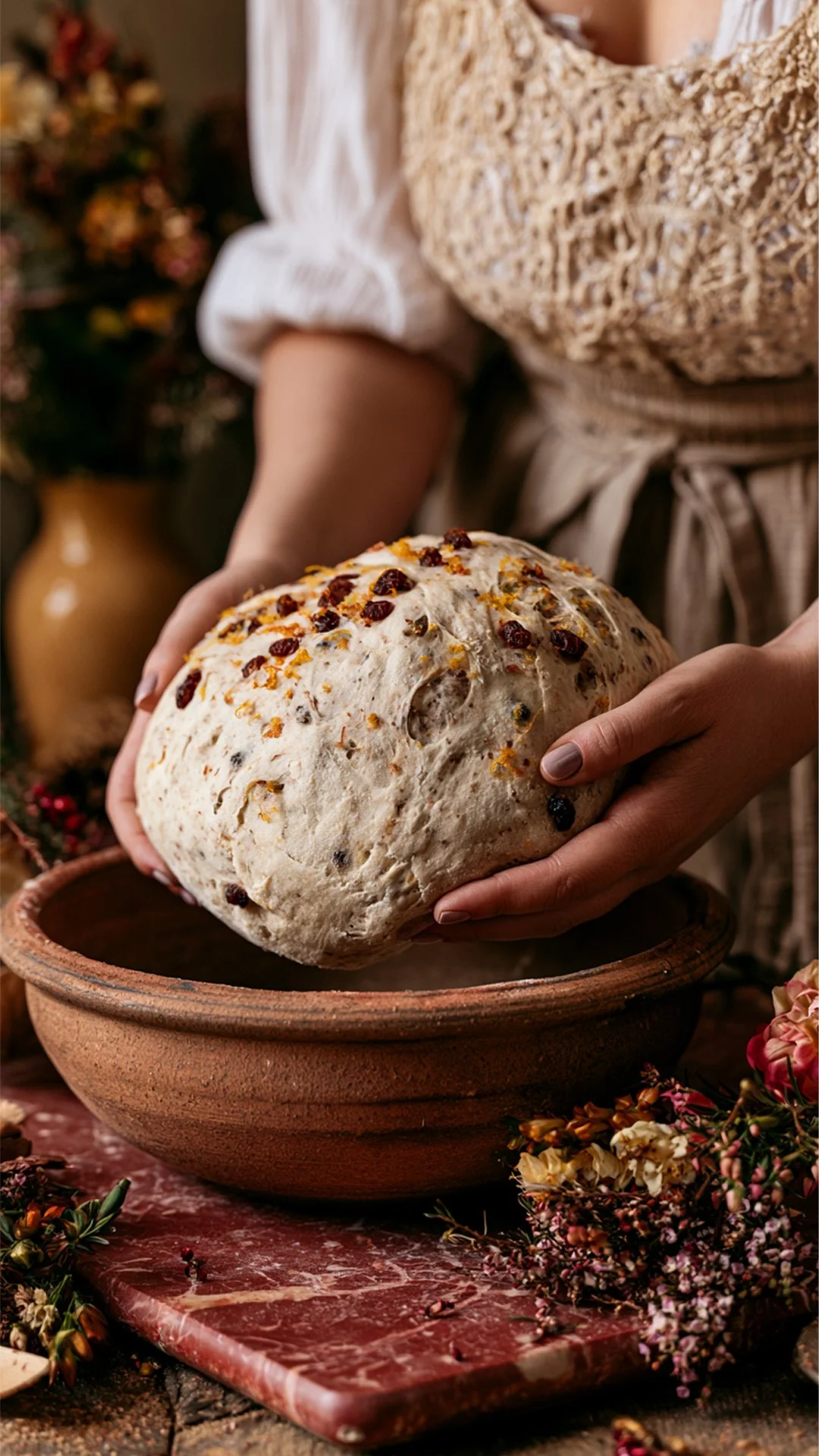
Tip out: Tip the risen dough onto a lightly floured surface.
Shape: Shape into a tight round, tucking the dough under itself to build surface tension across the top.
Into the banneton: Place the dough smooth side down, seam side up, in a floured banneton.
Stitch the seam: Carefully stitch the seams together across the base of the loaf, pulling alternate sides into the middle to tighten the shape.
Cold Proof: Cover the banneton lightly with a clean towel and refrigerate overnight.
BAKE
Instructions
Preheat: The next morning, preheat the oven to 446°F (230°C) with a sheet tray on the lower rack.
Turn out: Tip the cold dough straight from the fridge onto a room-temperature sheet of parchment.
Score: Score with a bread lame. A pine branch works well here, one long spine down the centre with the ribs angled off it. Scoring gives the gas built up in the dough somewhere to go.
Into the oven: Place the dough on the middle rack.
Add steam: Immediately throw two handfuls of ice onto the hot tray below and close the door.
Bake: Bake for 30 minutes, then turn the heat down to 400°F (204°C) and bake a further 20 to 25 minutes, until the internal temperature reaches 205–210°F. If the crust is colouring too fast, tent loosely with foil.
Cool: Remove and cool for 3 to 4 hours before enjoying.
Baker’s Notes
The cream and sugar make this an enriched sourdough, closer to a panettone than a country loaf. It behaves differently from a lean dough at every stage and it needs the full knead.
Drain the fruit properly. Excess water will slacken the dough and streak the crumb.
Zesting four oranges takes longer than you expect. Do it before anything else.
Mace is the outer casing of nutmeg, warmer and less sweet with something almost floral underneath. If you cannot find it, use an extra ½ teaspoon of nutmeg, though the flavor will be flatter.
British mixed spice is not the same as American pumpkin spice. If you cannot source it, blend cinnamon, coriander, nutmeg, ginger, cloves, and allspice.
The sugar in this dough colours the crust faster and darker than a plain loaf. Judge doneness by internal temperature rather than by eye.
The overnight cold proof firms the dough for scoring and sets the crumb so it holds under the weight of all that fruit. It is not optional.
Keeps under a cloth at room temperature for up to four days and improves with toasting on every one of them.
Why You’ll Love It
This Christmas spiced sourdough is soft, deeply fragrant, and studded with plump fruit and bright threads of orange zest. The cream and sugar give it a tender crumb that stays soft for days, while the long cold ferment builds a quiet sourdough depth underneath all that warm spice. It is the loaf to make when people are coming, and the one you will still be toasting on the strange unmarked mornings after.
FAQ
Can I make this Christmas sourdough without a stand mixer?
Yes, but be prepared for a long knead. This dough is enriched with cream and sugar, which slows gluten development considerably. By hand you are looking at 20 to 25 minutes of steady work, or you can use slap and folds with rest periods in between. The dough will feel wrong for much longer than you expect. Keep going.
Why does the dough stay so sticky and slack?
Fat and sugar interfere with gluten formation, so an enriched dough takes far longer to come together than a lean one. The most common mistake is adding extra flour to fix it, which gives you a dense, dry loaf. Trust the timing and let the mixer do its work.
Can I use sourdough discard instead of building a levain?
Yes. Use 280 g of active starter or discard in place of the levain. Discard will give you a slightly tangier loaf with a little less lift, which suits this bread perfectly well given how much is going on in the crumb.
What is British mixed spice and what can I use instead?
British mixed spice is a warm blend of cinnamon, coriander, nutmeg, ginger, cloves, and allspice, and it is the backbone of most British Christmas baking. It is not the same as American pumpkin pie spice, which leans much more heavily on cinnamon and ginger. If you cannot find mixed spice, blend your own from those six.
Can I skip the overnight cold proof?
Not really, no. The cold ferment does three things: it deepens the sourdough flavour, it firms the dough enough to score cleanly, and it sets the structure so the crumb holds its shape under the weight of all that fruit. Bake it the same day and you will get a flatter, denser loaf.
Why does the crust go so dark?
There is 125 g of sugar in this dough and it caramelises fast. That deep colour is part of what makes the loaf, but if it is getting away from you before the centre reaches temperature, tent it loosely with foil for the last stretch of the bake.
Can I freeze it?
Yes. Cool completely, wrap tightly, and freeze whole or pre-sliced for up to three months. Pre-slicing is worth doing, since you can toast it straight from frozen. Thaw a whole loaf at room temperature and refresh in a 300°F oven for 10 minutes.
How should I store it?
Under a cloth on a board at room temperature for up to four days. Do not refrigerate it, which will stale the crumb quickly. It gets better every day and is best toasted.
Can I make this into rolls instead?
You can, though the timings change substantially. Divide after the bulk rise into 10 to 12 pieces, shape into rounds, cold proof overnight in a buttered pan, and bake at 375°F for 25 to 30 minutes until the internal temperature reaches 200°F.

More From the Kitchen


Share Your Bake
If you try this recipe, we would love to hear how it turned out. Leave a comment below to share your bake or tell us what you’re making next. Your feedback helps other home bakers, too.

This blueberry and currant crumble pie brings together sweet summer fruit and cozy autumn spice in every bite. A tender cottage cheese crust holds the jammy filling beneath a golden crumble, baked until bubbling and fragrant. Simple, warm, and quietly perfect.